Common Questions
AI Transcription Invents Words in Silence
Trace invented transcript text to silence, segmentation or earlier context, then test speech detection without removing quiet real speech.
Julian Thorne·3 min read·

Editorial contributor exploring research tools, student productivity workflows, and human-computer interaction for Lucivo.
Julian’s published articles cover student tools, source-based study, document drafting and everyday productivity. Choose a guide based on the task you want to complete, then check its sources and access requirements before adopting a new tool.
Start with AI tools for students to compare tools for learning and coursework. For working with your own reading materials, the NotebookLM study guide focuses on turning sources into a study workflow. Keep the original material available so you can check generated explanations against it.
For writing tasks, read the Claude Docs guide for a drafting and revision workflow. The AI productivity apps comparison helps you consider where another app fits into your existing routine. A tool that saves time on one step can still create extra work through corrections, subscriptions or moving files between apps.
Product features and access conditions can change. Use the dates and linked sources in each article when assessing whether its advice fits your situation. Read Lucivo’s editorial policy for the publication’s approach to sources and corrections.
Trace invented transcript text to silence, segmentation or earlier context, then test speech detection without removing quiet real speech.
Test multilingual RAG at extraction, retrieval and answer stages, using paired questions instead of assuming fluent output proves good search.
Check whether each AI citation supports its exact claim, and distinguish retrieval references, page offsets and unsupported conclusions.
Trace old document facts through chat history, retrieval collections and caches to understand why removed material still influences answers.
Use a harmless document fixture to test prompt-injection handling and enforce tool permissions outside the model's interpretation of text.
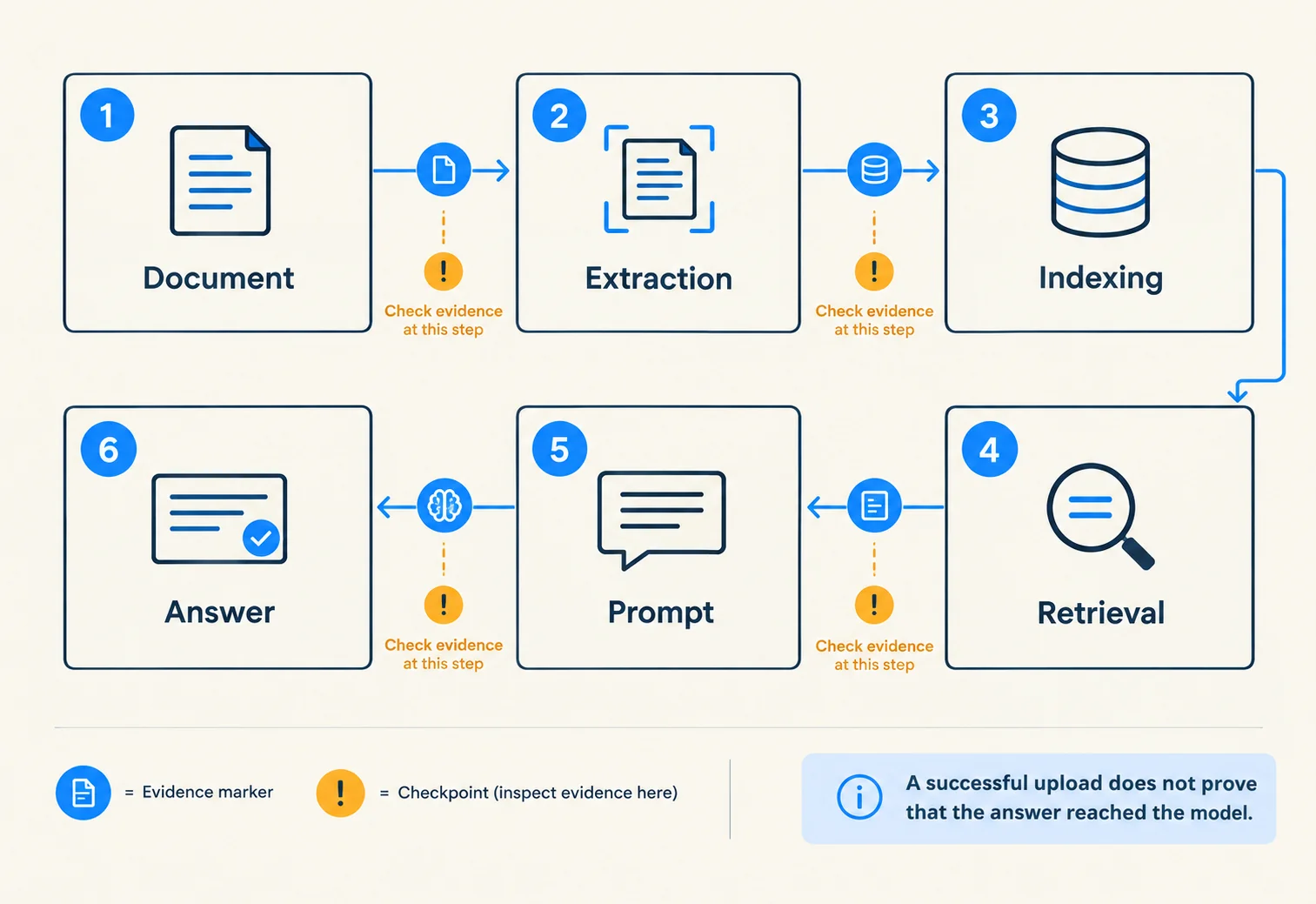
Trace a missing RAG answer through extraction, indexing, selection and retrieval instead of repeatedly uploading the same document.
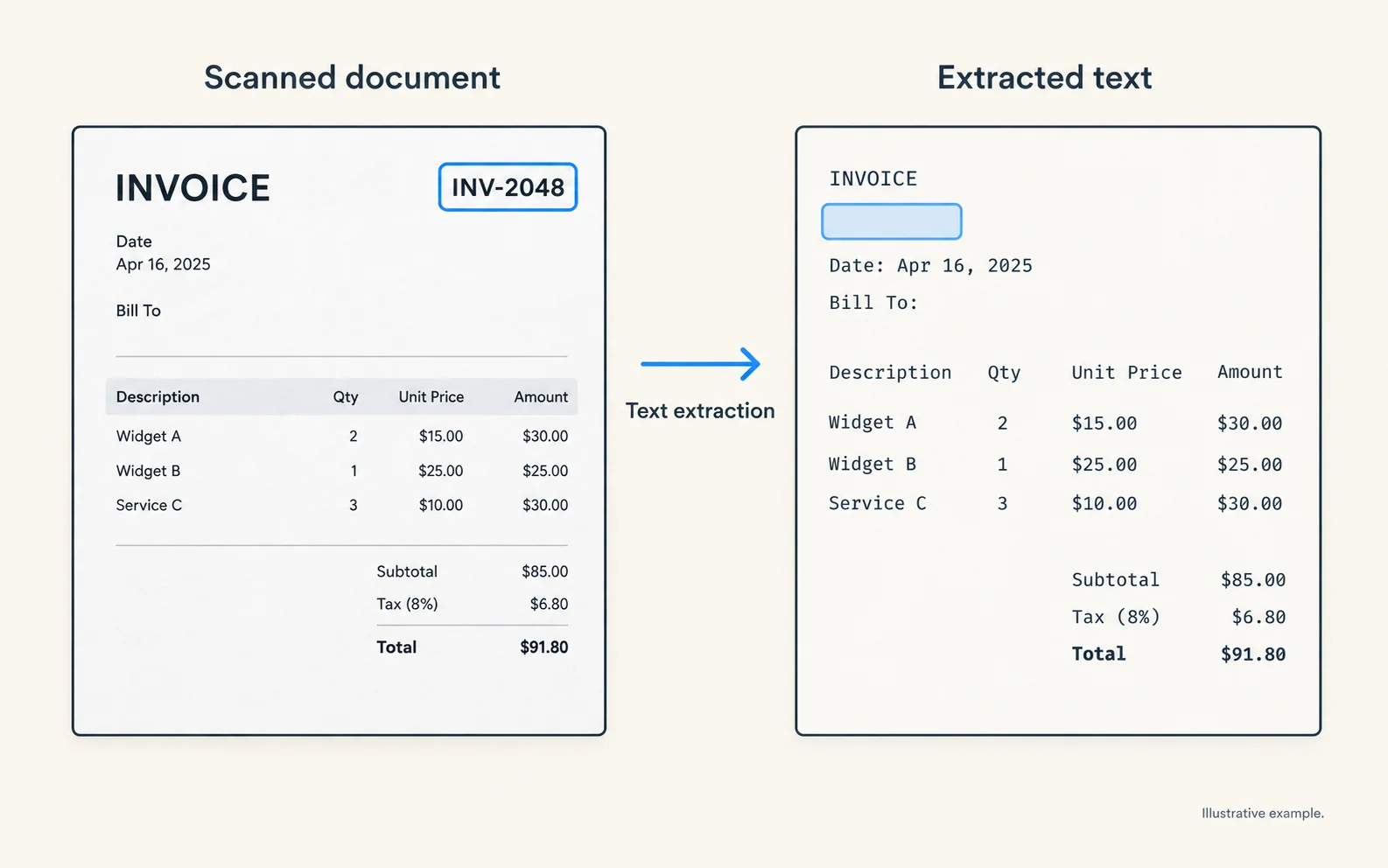
Diagnose scanned-PDF failures by checking OCR, reading order, indexing and retrieval before changing prompts or replacing the language model.
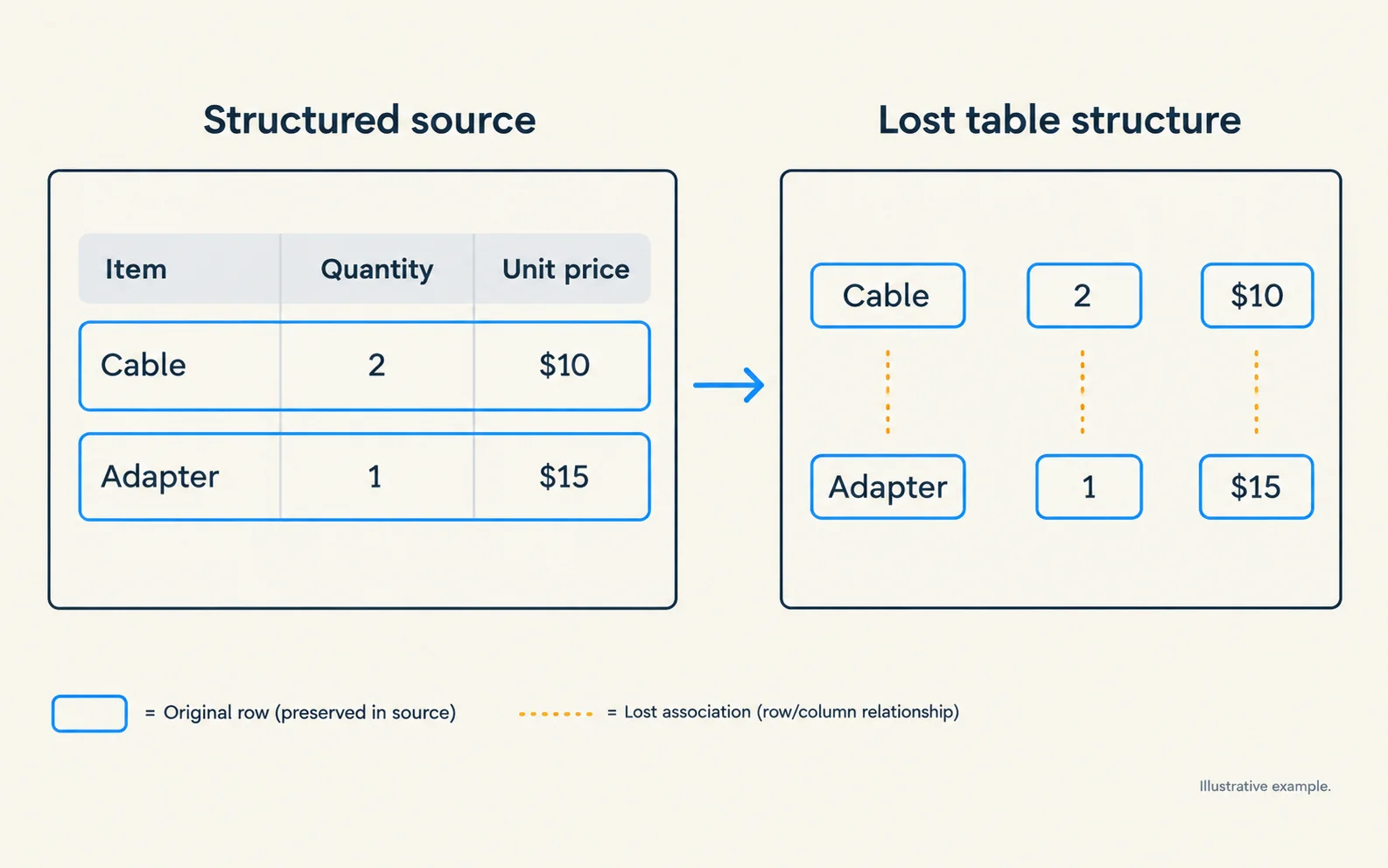
Find whether incorrect AI table totals come from parsing, missing rows or arithmetic, then choose a retrieval or calculation workflow.

Calculate the real cost of AI video generation per usable second. Count credits, retries and rejected clips, then compare tools by accepted footage.

Verify AI images with C2PA Content Credentials. Check image provenance, signatures and edit history, and learn what missing metadata cannot prove.

Explore Higgsfield AI for images, video and cinematic workflows. Understand its tools, limitations and the best starting point for your first project.

Compare verified Higgsfield monthly and annual prices, free-access limits and credit costs. Calculate your budget using accepted clips rather than attempts.

Write clearer Higgsfield prompts for push-ins, pans, tracking and orbits. Get eight original examples plus a checklist for fixing unwanted camera motion.

Compare Higgsfield and Runway on creative workflow, free access, credits and production needs. Use a fair shot test to choose the right platform.

Follow a practical Higgsfield AI tutorial: prepare a reference image, direct one camera move, review the result and export a useful first video.
Learn how to create, revise, share and export a document with Claude Docs, including current plan access, limitations and a practical first workflow.

Build a useful NotebookLM study workflow: choose course sources, ask focused questions, check citations, and turn mistakes into targeted revision.

A research-based shortlist for student writing, research, revision and organization, with official sources, access caveats and academic-integrity advice.

An editorial view of why AI productivity apps can feel interchangeable, and a practical way to judge integration, review effort and everyday usefulness.