Gemini 4 Pro: Release Status, Rumors and What We Know
Gemini 4 is in training, but Gemini 4 Pro is not released. Here is what Google has confirmed, what remains rumor and what would make it the best LLM.
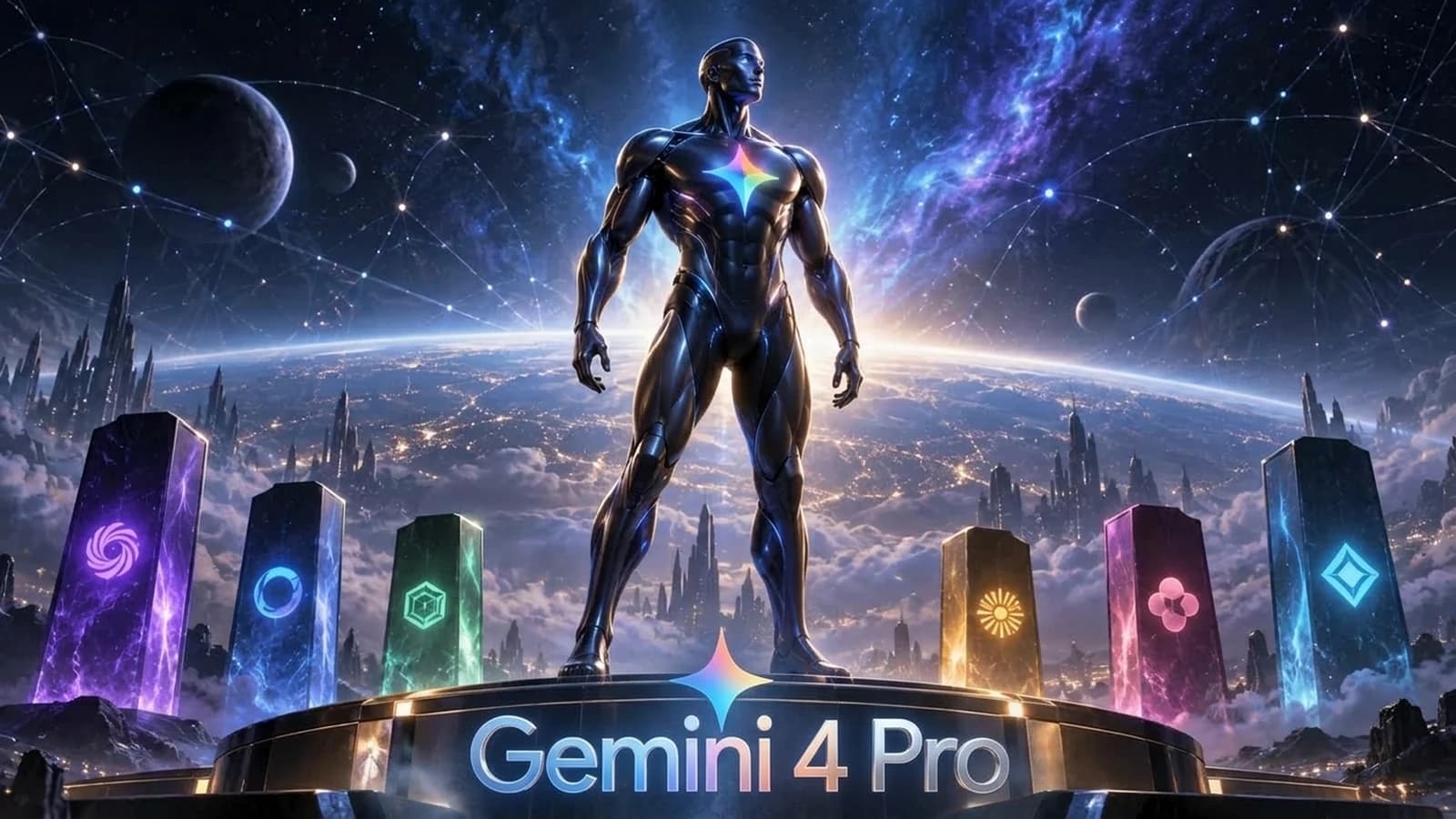
Executive Summary · In 30 Seconds
- Google has confirmed that Gemini 4 pre-training is underway, but it has not announced a Gemini 4 Pro product.
- There are no official Gemini 4 Pro specifications, benchmarks, prices, API model IDs or release dates yet.
- Gemini 3.1 Pro remains the current Pro model listed in Google's official Gemini API catalog.
- Calling Gemini 4 Pro the best LLM would require independent testing across quality, reliability, speed, cost and safety after release.
On this page
The short answer
Gemini 4 Pro is not an officially released model. Google has confirmed that it started pre-training Gemini 4, but it has not announced a product named Gemini 4 Pro, published a model card, opened an API endpoint or provided a launch date.
That distinction matters. Search results and social posts increasingly discuss Gemini 4 Pro as if its specifications and benchmark wins are already known. They are not. As of September 22, 2026, Google's official Gemini API model catalog contains no Gemini 4 model, while Google DeepMind's model-card index stops at the Gemini 3 generation.
What is real is more limited—and more interesting. Google says its most ambitious pre-training run yet is underway. Gemini 4 is coming in some form. Everything beyond that needs a label: confirmed fact, reasonable expectation or rumor.
Gemini 4 Pro status at a glance
| Question | Status on September 22, 2026 |
|---|---|
| Is Gemini 4 being trained? | Confirmed by Google |
| Is Gemini 4 Pro released? | No |
| Is there an official model card? | No |
| Is there a Gemini 4 API endpoint? | No |
| Are pricing and token limits published? | No |
| Are official Gemini 4 Pro benchmarks available? | No |
| Has Google announced a release date? | No |
The cleanest way to track the model is to watch Google's API catalog and DeepMind model cards. A model name appearing in a screenshot, an anonymous benchmark entry or a chatbot's own response is not equivalent to a product announcement.
What Google has actually confirmed
Google's only direct public statement about the next generation appeared in its July 21 announcement for Gemini 3.6 Flash, 3.5 Flash-Lite and 3.5 Flash Cyber. Near the end, the company said it had begun its most ambitious pre-training run yet for Gemini 4.
That confirms three things:
- Gemini 4 is a real model generation in development.
- Pre-training had started by July 21, 2026.
- Google described the training run as unusually ambitious.
It does not confirm a Pro edition, product lineup, release window, context length, pricing or performance. Pre-training is also not the final stage of shipping a frontier model. Post-training, safety evaluation, product integration and infrastructure work can all affect what eventually reaches users.
What is available instead
The current official Pro option is Gemini 3.1 Pro Preview. Google's Gemini 3.1 Pro model card describes it as a natively multimodal reasoning model for complex tasks, including agentic work, advanced coding, long-context analysis and algorithm development.
Its published specifications provide a useful baseline:
| Capability | Gemini 3.1 Pro Preview |
|---|---|
| Input | Text, images, video, audio and PDFs |
| Output | Text |
| Input context | 1,048,576 tokens |
| Maximum output | 65,536 tokens |
| Tools | Function calling, code execution, search grounding and structured output |
| Status | Preview |
Google's model catalog also lists newer Flash models. Those emphasize different tradeoffs—especially latency, efficiency and cost—rather than replacing the Pro tier with a single universally superior option.
This is one reason model names need context. “Newest” does not automatically mean “best,” and “Pro” does not necessarily mean the right choice for a fast, inexpensive production workload.
Why people expect a Gemini 4 Pro
The expectation is understandable. Previous Gemini generations have used names such as Pro, Flash, Flash-Lite and specialized variants. A future Pro model would fit that pattern as the reasoning-focused member of the Gemini 4 family.
But a naming pattern is not an announcement. Google could change the lineup, release another Gemini 3 model first, introduce Gemini 4 through a limited preview or use a different product name. Until the company publishes a model page or endpoint, “Gemini 4 Pro” is best understood as the likely name people use for a possible future model—not a confirmed SKU.
The same caution applies to supposed hidden tests. Frontier-model companies sometimes evaluate anonymous systems before launch, but an unidentified result cannot establish a model's name, final configuration or production performance. Treat claims about disguised Gemini 4 Pro deployments as unverified unless Google confirms them.
Could Gemini 4 Pro become the best LLM?
Possibly. Google has the research depth, computing infrastructure, product distribution and multimodal experience to build a leading model. Gemini 3.1 Pro already establishes a strong foundation in long-context, multimodal and agentic work.
But “best LLM” is not a single measurable title. A model can lead on difficult reasoning while losing on latency. It can excel at coding but cost too much for high-volume support. It can top a benchmark and still make frustrating mistakes in a real tool workflow.
A serious evaluation should cover at least these dimensions:
| Dimension | What to test |
|---|---|
| Reasoning quality | Difficult, unfamiliar problems rather than memorized questions |
| Coding | Repository-level changes, debugging, tests and instruction adherence |
| Multimodality | Mixed text, image, audio, video and document tasks |
| Agent reliability | Tool selection, recovery from failure and long-horizon completion |
| Factuality | Citation quality, calibration and resistance to unsupported claims |
| Speed | Time to first token and total task completion time |
| Cost | Input, output, caching and tool-use costs for a real workload |
| Safety and control | Appropriate refusals, steerability and data-handling options |
Independent results matter because vendor benchmarks are selected and configured by the company releasing the model. They are useful evidence, but not the whole verdict. The strongest comparison will combine official evaluations, independent reproducible tests and trials on the work you actually need to complete.
For the same reason, our practical ChatGPT versus Claude comparison focuses on workflow fit instead of declaring one permanent winner.
What Gemini 4 is likely to focus on
Google has not published Gemini 4 capabilities, so the following are expectations, not specifications.
Stronger agentic execution
Google's recent model pages emphasize tool use, coding and multi-step workflows. A next-generation Pro model would likely be judged on whether it can plan, call tools, inspect results and recover from errors with less supervision. That is the difference between a polished chatbot and the more complete systems described in our guide to what an AI agent really is.
Native multimodal reasoning
Gemini has been multimodal by design across several generations. It would be surprising if Gemini 4 narrowed that scope. The meaningful question is not whether it accepts several media types, but whether it can reason across them reliably—for example, connecting a diagram, a spreadsheet and a spoken explanation in one task.
Better efficiency, not just higher scores
Google's 2026 releases repeatedly stress latency, token efficiency and production scale. A stronger Pro model could still be difficult to deploy if every answer is slow or expensive. Expect efficiency to be part of the competition, even if headline coverage concentrates on intelligence benchmarks.
Deeper integration with Google's products
Current Gemini models appear across the Gemini app, Google AI Studio, the Gemini API, Vertex AI and other Google products. Similar distribution would be plausible for a future generation, but access tiers and rollout order remain unknown.
What not to believe yet
Be skeptical when a Gemini 4 Pro claim includes any of the following without a primary source:
- An exact release day or subscription price
- A precise context-window size
- Benchmark tables with no reproducible methodology
- Claims that it secretly powers a named public model
- Confident comparisons against competing models that did not exist when the test was supposedly run
- API setup instructions using an undocumented
gemini-4-promodel ID
There is also a simple hallucination trap here: asking an AI model to identify itself is not reliable verification. System routing, stale knowledge or generated text can produce a confident but false model name. Use the vendor's documentation, account interface and API response metadata instead. Our AI hallucination verification checklist provides a repeatable process for checking claims like these.
Should you wait for Gemini 4 Pro?
Probably not if you have work to ship now.
Choose a current model based on your task and budget, then keep the integration portable. For an API product, isolate model-specific settings, record evaluations and avoid depending on undocumented behavior. That makes a future Gemini 4 migration a controlled test instead of a rewrite.
Waiting can make sense if your project is exploratory and a new model would change its economics. Even then, there is no official date to plan around. The practical move is to build a small evaluation set now—representative prompts, expected outputs, latency targets and maximum acceptable cost—so Gemini 4 can be tested quickly if and when it arrives.
The bottom line
Gemini 4 is real, but Gemini 4 Pro is still a prospect rather than a product.
Google has confirmed the training run and nothing more specific. The model may eventually become one of the strongest LLMs available, but there is not enough public evidence to award it that title today. No release means no production pricing, no final model card, no independent testing and no honest winner.
For now, use Gemini 3.1 Pro or another available model that fits your workload. Watch the official catalog, ignore invented certainty and evaluate Gemini 4 on real tasks when Google actually ships it.
Sources and further reading
Common Questions & Practical Answers
No. As of September 22, 2026, Google has confirmed that Gemini 4 pre-training is underway, but its official model catalog does not list Gemini 4 or Gemini 4 Pro.

Editorial contributor covering foundational AI models, agentic workflows, and systems engineering for Lucivo.
Related articles
How to Check AI Hallucinations Before You Trust an Answer
ChatGPT vs Claude: Which One Is Better for Everyday Work?

RAG vs Fine-Tuning: Which Does Your AI Project Actually Need?
The Weekly Breakdown
High signal AI & software stories.
Direct to your inbox. No hype.
Independent analysis of AI models, developer tools, and computing architectures. Delivered every Sunday morning. 100% free.